
Senior Investigative Journalist
joshua.seemun[email protected]
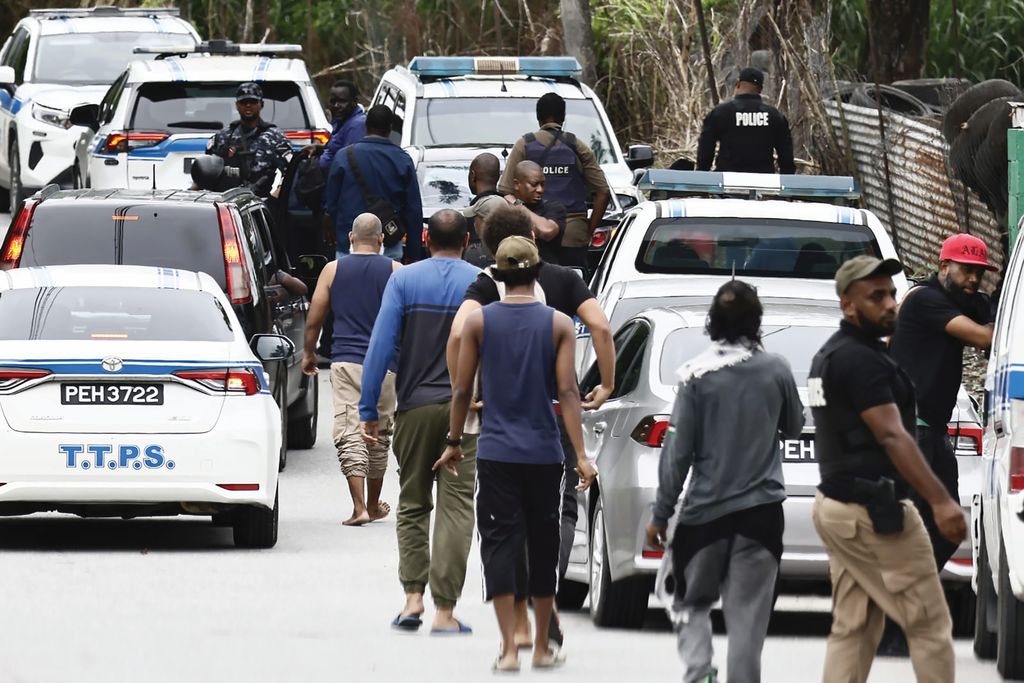
Since December 2024, T&T has spent 301 days under a State of Emergency (SoE).
The last State of Emergency ended yesterday.
In 2025, T&T spent approximately 72 per cent, 270 days or 6,240 hours, in an SOE, continuing into 2026.
In contrast, 28 per cent of 2025, equivalent to just 105 days or 2,520 hours, was spent outside of one.
The Government’s follow-up to implement Zones of Special Operations via a Bill failed in the Senate last week.
Between January and March, statistics provided by the Trinidad and Tobago Police Service showed that in the first three full months of the first SoE, there were 3,036 reported serious crimes, averaging 1,012 serious crimes per month.
The three months predating the implementation of the SoE saw fewer reported crimes, 2,606 serious crimes, averaging 869 serious crimes per month.
However, the most heavily scrutinised crimes—robberies, burglaries and break-ins and murders—all decreased.
Between October and December 2024, there were 151 murders according to the TTPS.
That dropped to 98 murders between January and April 2025—a 35 per cent decrease.
There was a 15 per cent decrease in robberies and a one per cent decrease in break-ins.
Criminologist Dr Randy Seepersad said his own data also showed that there were fewer crimes during the SoEs.
“The bottom line is that lives would have been saved as a result. Now, notwithstanding the coming to the end of the SoE, it was clear to me that the Government realised that a SoE isn’t a long-term sustainable type of approach and that something else, meaning something more, by way of intervention, was needed.
“Hence the reason that they were at least attempting to bring the zone of special operations approach to Trinidad and Tobago. Unfortunately, as you know, it didn’t get through Parliament, and unfortunately, I understand, the Prime Minister says that she doesn’t plan to bring it back. I hope that she reconsiders because that particular approach is an approach which is very successful in locations such as Jamaica,” he said.
According to Seepersad, the Government correctly recognised a need to utilise suppression.
“The problem with the suppressive approach is that once you lift your finger off the problem, the problem re-emerges in full force. And that is precisely what we are going to expect if the SoE is lifted.
“Notwithstanding, I do also want to mention that some of the comments that were raised in Parliament are valid criticisms that we really need to look at. One, for sure, is the issue of human rights. We may not have to go to the extent of body-worn cameras, as some senators suggested, but we could do other things. We could, for instance, ensure that there’s a very high proportion of community police officers. We can ensure some level of pre-training officers,” the coordinator of UWI St Augustine’s Criminology Department said.
Meanwhile, criminologist Dr Daurius Figueira believed that the SoEs failed to comprehensively stop the everyday workings of the gangs, despite alleged leaders being detained.
He believed the decreases in crime numbers during the SoEs had more to do with pre-existing gang dynamics.
“As the SoE winds down, hence the rush for ZOZOs—which is a cruel myth as it did not accomplish what the Jamaican and T&T politicians say it did in Jamaica— the reality is Pax Mexicana since 2023 controls the East-West Corridor and Tobago, which means they control the beating heart of Gangland—note how dead quiet it is. The Colombian Dons control from Cunupia to Barrackpore—note how it is the new land of violence.
“The SoEs have made no difference, for the murder toll dropped precipitously as there were simply no more targets to kill; they are all dead. All that is left now are supposed leaders without followers, turf and product. Those affiliated with the Colombian Dons let out from prison shall have to flee to the turf of the Colombian Dons, intensifying the mayhem in Kamla’s political heartland. And if they are walking dead, they shall die down there,” he said.
Criminal attorney Criston J Williams also believed the SoEs failed to achieve any genuine success.
“The UNC declared a state of emergency based on undisclosed intelligence and alleged threats to national security. Remember, there was the report of a rocket launcher, and there were the threats to ministers, judges… The public was asked to accept extraordinary executive power in the absence of any indictments or outcomes connected to the alleged plots that were the basis of the SoE in the first place.
“What both governments seemed to do is try to normalise in the population’s mind a state of emergency, exceptional police power, and they wanted the population to accept this. But with the ZOSO—that mentality they wanted us to accept, that approach—collapsed in the Senate, and rightly so. So that is an indictment of the strategy right now,” he said.