
Senior Political Reporter
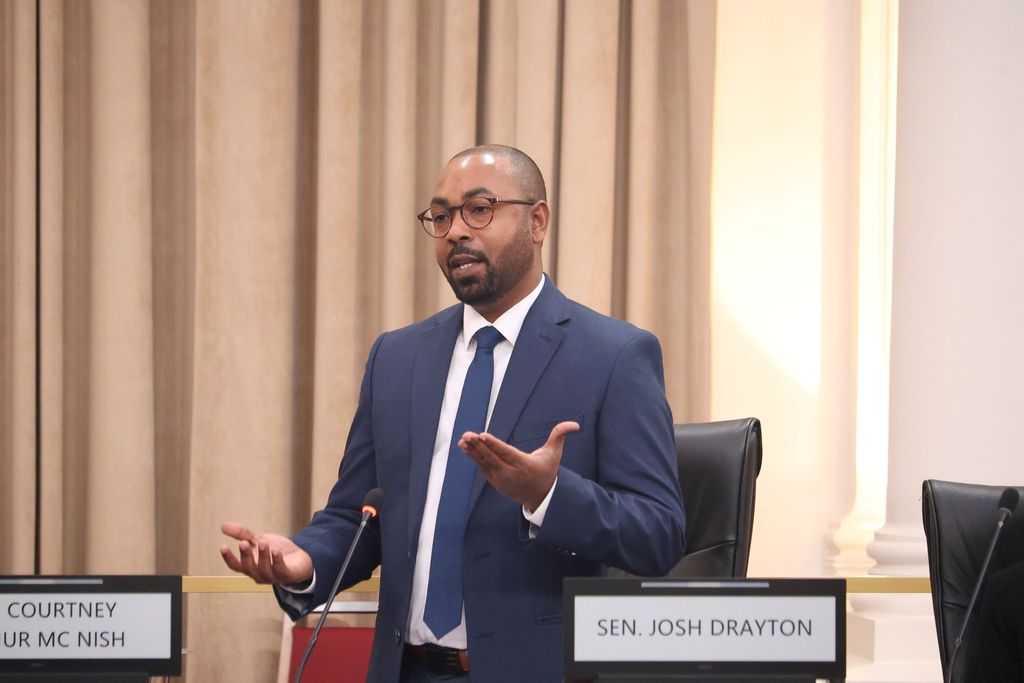
Organised crime and illicit flows of money are propping up Trinidad and Tobago’s economy and providing jobs and benefits within many communities, according to Independent Senator Josh Drayton.
Drayton made the point when he spoke in Tuesday’s Senate debate on the Zones of Special Operations (ZOSOS) bill. Debate continues today.
Drayton said he supported the bill, but with the caveat that it should be piloted as an experiment for two to three years, with a sunset clause, “and monitored to see how it goes, and then you can make that change.” He added that a sunset clause specifying a fixed time period differed from a “from time to time” provision, to which the bill would be subject.
Drayton is a researcher in anti-corruption, governance, open government and public policy. He teaches public policy and anti-corruption at The University of the West Indies.
He said the areas where zones may be are where there is a parallel system of government with assets, protection and justice and are highly sophisticated. Drayton noted some gangs even control cars plying as taxis in their areas.
While there are leadership structures and some assets may be concentrated in some areas, it is known that beyond those numbers, there are other elements that are a bit more fluid in the East-West corridor, as well as in Tobago.
“It’s known,” Drayton confirmed.
While zones will secure specific spaces, he noted that they are always evolving and fluid.
“There are criminals who are connected via their families, relationships and friendships with various elements throughout T&T and the region. We’re speaking about transnational organised crime.”
Drayton referred to the “Unholy Trinity” of guns, money, and drugs, noting that an organisation is required to control all three, which in turn drives organised crime. He said a government or law enforcement has to reduce assets of criminal groups, plus their gun and drug flows.
Civil asset recovery via “following the money” is also needed.
“We’re in a really bad state as a country and as a region,” he said.
“It has become so dire in some of these communities that persons are unable to survive without the input of these gangs. Many would know about ‘dons’ (crime bosses) in Jamaica; we see the same things happening here with the zones,” he added.
Noting that criminals move and zones may be fluid, Drayton sought clarity on what a zone constitutes: whether it is a high-crime area for certain types of crimes or only for murders. He also expressed concern about verification of people doing legitimate business in zones.
Drayton noted Jamaica did not have that much success with zones as opposed to an SoE.
Opposition PNM Senator Faris Al-Rawi, who queried a number of the bill’s aspects, indicated that it will be argued in the courts. He also cited differences between Jamaica’s ZOSOs model and T&T’s legislation.
While the bill suggests a cordon and curfew, he said T&T had the Emergency Powers and the Disaster Management Act, which allowed parts of T&T to be taken over and managed and for compensation to be paid.
“But this law doesn’t allow for compensation.”
Al-Rawi said Jamaica’s zones law—which he said was formulated by a colleague of his—had an independent commission comprising government and opposition members, and T&T’s law doesn’t have that.
Jamaica’s commission examined complaints against security forces, but T&T has the Police Complaints Authority for complaints against police.
Nor does T&T’s National Security Council include an opposition member, as Jamaica’s does; additionally, the proposed Social Transformation Committee, intended to work with communities, seemed inevitably to fall under ministerial control, he noted.
He said the recently passed T&T law allows a Justice of the Peace to grant bail immediately—but the zones bill didn’t suggest that.
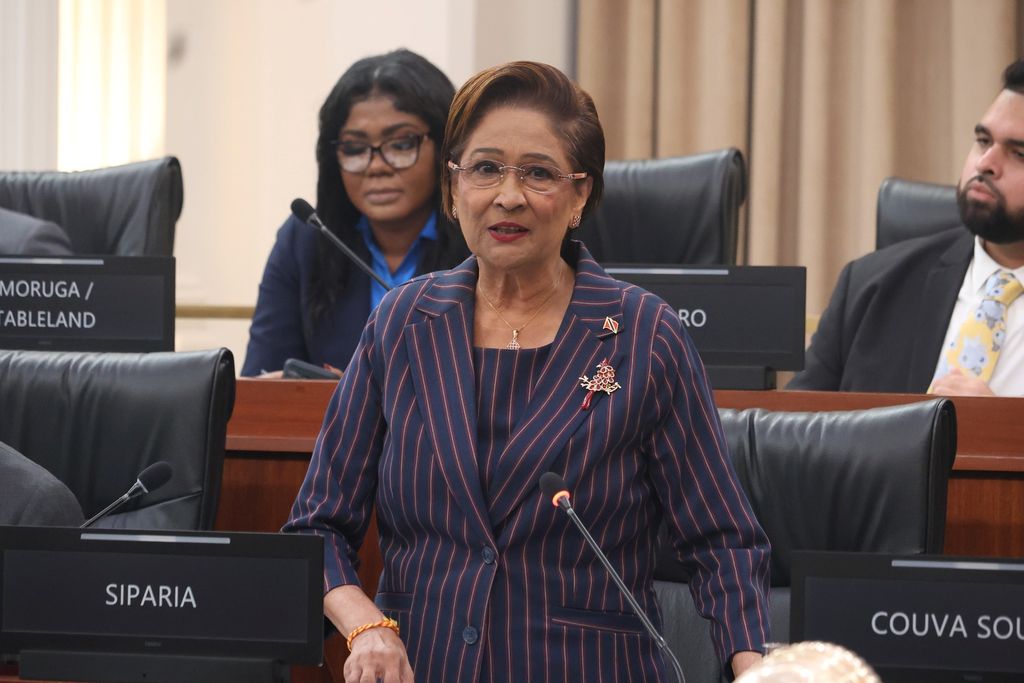
Al-Rawi also blamed the PNM’s inaction to implement a similar bill it had in 2017 on then opposition leader Kamla Persad-Bissessar’s non-response to letters the PNM government wrote her on that bill.
“The bill was dead in the womb!” he said.