Defence Minister defends ZOSOs; says loss of rights necessary in arresting crime
 22 January 2026
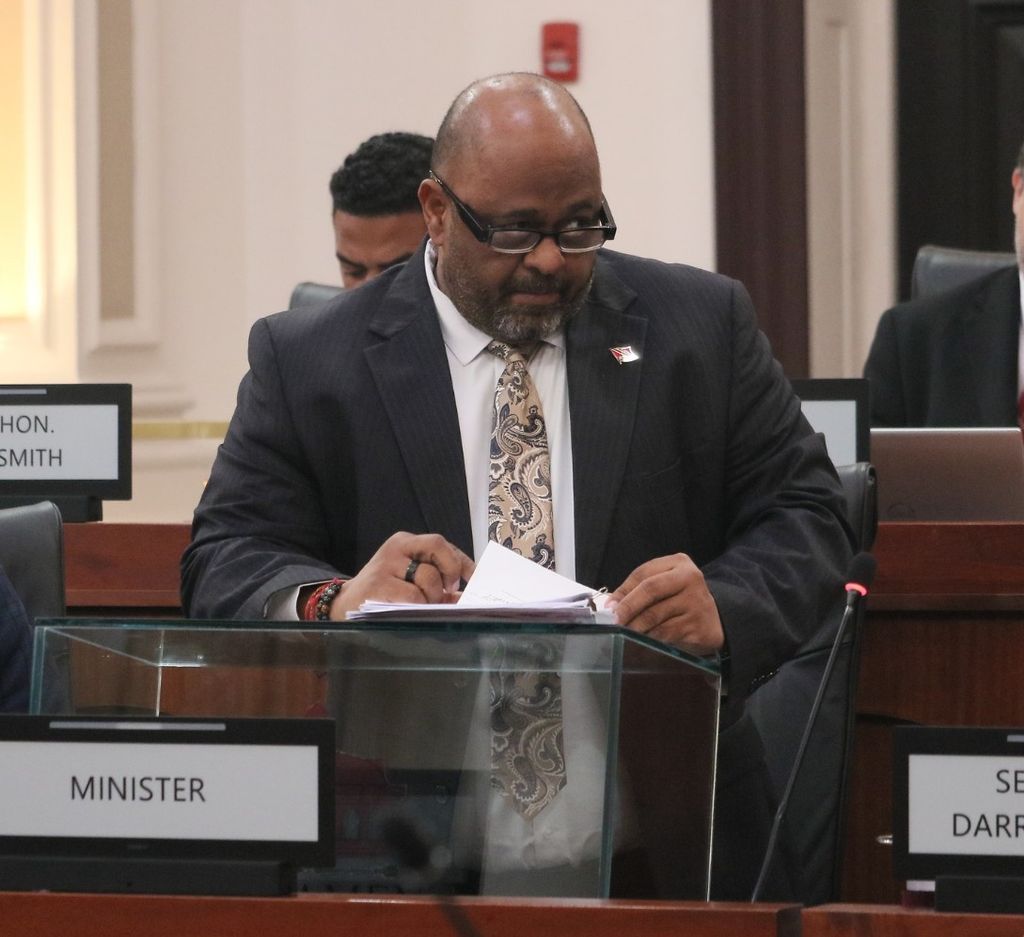

If Government’s Special Operation Zones (ZOSO) Bill is geared towards getting rid of people who have AK-47 and Galil automatic assault weapons, the fact that people’s constitutional rights will be targeted “is a small price to pay,” says Defence Minister Wayne Sturge.
And Sturge has slammed the “social media chorus” of complaints about the bill’s provision for arrest and searches without warrants—and he’s rebutted the T&T Law Association’s concern on the harsh fines in the bill.
Sturge did so during yesterday’s Senate debate of the Law Reform (Zones of Special Operation) (Special Security and Community Development Measures) Bill, 2026.
Debate began on Tuesday night and will continue tomorrow.
Attorney General John Jeremie, who piloted the bill then, was out of T&T yesterday.
Sturge said among crime-affected constituencies, “Central Trinidad might be number one. There was a time when bodies were dropping daily in Laventille. When last have you heard that? That’s because of effective ZOSO operations ... being used for the last ten years. Now we’re seeking to have it clothed with the respectability of law.”
Sturge took issue with what he said was the “social media chorus”, “... where people seem to have a problem with punishment ... and this thing about ‘if a $20,000 fine is imposed, I might have to wait on another salary or two’. The courts allow extension of time to pay fines.”
“But it seems as though some people in this country are all for law and order and Government being tough, until the law applies to them. That has to change...”
On the “big song and dance” also on social media about arrest minus warrant, Sturge said one can already, at common law—and in some statutes—be arrested without warrant.
There are also examples where a search of a person/property/vehicle can be done minus warrant. He said there are many instances where those sworn to protect and serve, alert people of warrants.
“We’re not saying in all instances, searches will be done without warrants. It’s simply giving the power to do so,” he said.
He said searches could proceed minus a warrant. If redress is sought in courts, “you might end up with nominal damages. Or zero damages, if TTPS demonstrates why they searched...”
“... Because the law operates with a measure of practicality and common sense and the law would say, if in that situation we’re trying to get rid of people who have AK-47s and Galil weapons, then the fact that we target your constitutional right is a small price to pay ...” Sturge added.
He said cordons of areas don’t mean one can’t leave the cordon.
“But there’s the discretion of the officers in charge and, of course, you’ll be searched.”
Saying the curfew was also necessary, Sturge said, “This (bill) is a targeted approach, designed to go after those who the act speaks quite clearly about. Not the ordinary citizen. The ordinary citizen can go about their business unless there’s reasonable suspicion/grounds.
“... And that relies on informants’ information, intelligence and on things perceived. It’s not simply you’re wearing your pants below your buttocks and I can see you’re wearing a Hanes underwear and you look like the type of person who may have guns—although for me that’s a very good start. But I’m not a policeman,” Sturge added.
High fine needed
to deter culprits
Sturge said some LATT suggestions are admirable and may find favour. But he cited some LATT concerns—such as the $50,000 fine for curfew breaching—which the association found disproportionate.
“While Parliament says the fine is $50,000 and imprisonment, the law is clear that Parliament can’t tell a court what sentence should be imposed,” Sturge advised.
He said where a sentence is stated in a bill, the courts interpret it as a maximum. This doesn’t remove courts’ discretion to impose a lesser sentence, though it can’t be above the maximum penalty, he noted.
“So, persons breaching curfew and who may very well have good excuse and can satisfy a court the excuse is good, it’s open to a court to say although the maximum is $50,000, we’ll fine you $5,000 or $10,000 or not fine you at all,” he said.
Sturge said the court can also impose a good behaviour bond or reprimand and discharge depending on the argument.
He disagreed the fine was disproportionate, since he said it targets people who can actually pay.
“... Gang leaders, who make money from drugs, human trafficking, prostitution, extortion—how do you expect to deter them if the fine is $5,000?”
Urging support for the bill, Sturge said, “We all have a responsibility to say to our black and brown brothers who are killing each other and harming the rest of us: no one here living in a rich area lives very far from the ghetto. No matter where you live, the ghetto’s very close—so it will reach you...”
Replying to Independent senator Josh Drayton’s call for a sunset clause, Sturge said the bill provides for review by a Parliament committee and has a provision to monitor efficacy.
He dismissed People’s National Movement Senator Faris Al-Rawi’s arguments, including that the former Opposition Leader’s non-response to the PNM government on such a bill had halted it.
Related News

NLCB cements Sunday lottery draws beginning February 8
Ghany urges PNM introspection after THA loss
Persad-Bissessar criticised for targeting independent institutions