
International law experts are questioning the legal advice and its interpretation that led Attorney General John Jeremie to conclude that the recent US strikes on alleged drug boats in the Caribbean did not violate international law.
During a media conference at the United National Congress (UNC) headquarters in Chaguanas last Wednesday, Jeremie defended the legality of the strikes, stating they were “consistent with international law.”
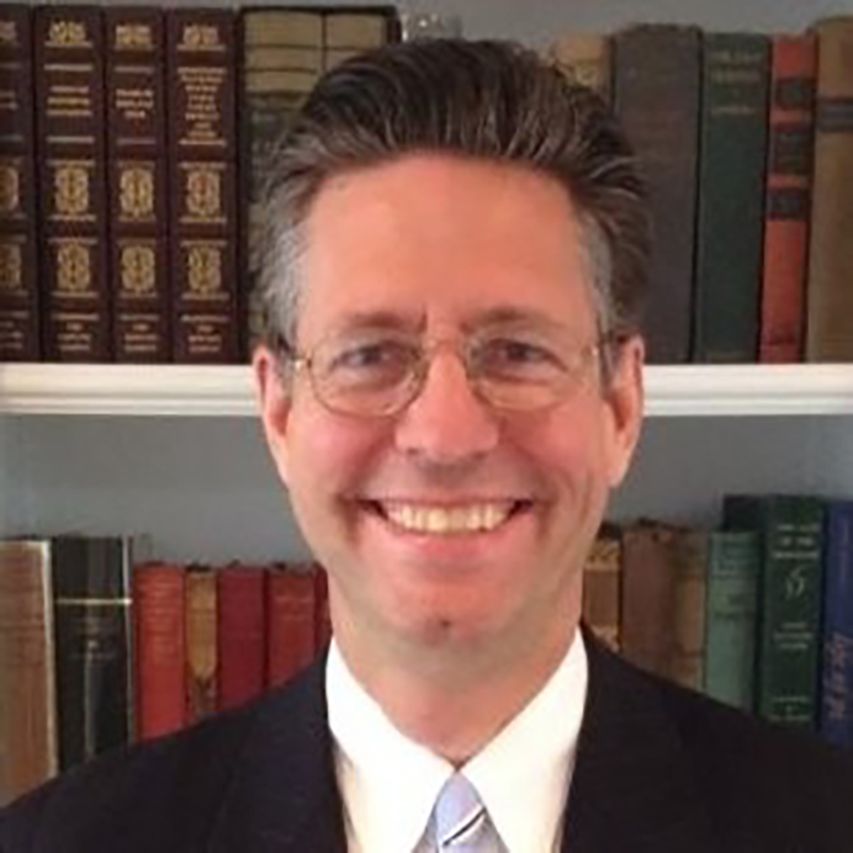
Contacted on the issue, however, US-based law consultant John C Knechtle says while he had not seen the assessments the Attorney General were relying on, military force against civilians, including alleged drug traffickers, is prohibited under international law. He noted that countering narcotics is primarily a law enforcement matter governed by criminal laws rather than the law of armed conflict.
The US Coast Guard has traditionally conducted narcotics interventions under criminal law, not the international law of war, he said.
“The pursuit of drug traffickers is a criminal law enterprise and is governed by the criminal laws of countries. It often involves conflict. The US Coast Guard regularly pursues drug traffickers at sea, and sometimes they fire back. There are exchanges of fire, loss of life, ships are sunk, and there are even narco-submarines and similar incidents,” he explained.
From September to the present, the US military has killed at least 115 people in a series of over 35 boat strikes in the Caribbean Sea and Eastern Pacific Ocean. This preceded that US military’s action in Venezuela that led to the ouster of Nicolas Maduro on January 2.
Knechtle, a former senior law lecturer at the University of the West Indies, added that Trump administration’s approach, which frames drug trafficking as an armed conflict, is unprecedented and has not been upheld by any international court or body.
“And that’s the novel theory the Trump administration is putting forward, and perhaps the theory the Attorney General is referring to here,” he said.
While the AG maintained his position under questioning by the media last Wednesday, he refused to disclose who provided the legal interpretation. Addressing this, Knechtle said although confidentiality and national security may protect sources, transparency is essential to maintain public trust.
Knechtle said he will be closely following the Colombian family who filed the first known formal complaint with the Inter-American Commission on Human Rights (IACHR) over the deadly strikes. On September 14, fisherman Alejandro Carranza, 42, was out at sea when the US conducted a strike, which it announced the following day. In the ensuing days, Carranza’s family and friends feared the worst. US lawyer Dan Kovalik is representing the family.
“This is a very contested approach in the US that President Trump is taking...But at least we’re going to have one case now moving forward within an international body to hear the case... I don’t know if this case will ever – the situation will ever be brought before the International Court of Justice and that they will have an opportunity to rule on it, but at least we have this case coming forward,” he said.
Legally, Knechtle said he does not foresee likely legal consequences for Trinidad and Tobago arising from its alignment with the United States, even if the strikes are later challenged internationally. Politically, however, he noted that there could be regional repercussions. At the same time, he acknowledged that such alignment may also bring political or economic benefits, including visa exemptions or more favourable negotiations in areas such as oil and gas.
On January 14, the US State Department announced that immigrant visa processing would be suspended for 75 countries, including many in the Caribbean, with the exception of Trinidad and Tobago, Suriname and Guyana.
In a more pointed response, distinguished professor and local scholar Andy Knight took significant issue with Jeremie’s statement that the execution of scores of people was somehow “consistent with international law.”
“I have no idea where he studied international law,” Knight stated.
Knight said based on publicly available information, serious international law concerns arise on three overlapping fronts in relation to the killings.
He first pointed to the UN Charter framework on the use of force, which requires states to refrain from the threat or use of force against the territorial integrity or political independence of any state.
Second, he cited the law of the sea governing enforcement on the high seas, noting that outside of narrowly defined exceptions such as piracy, the slave trade, unauthorised broadcasting, stateless vessels, or specific treaty-based enforcement regimes, the flag state retains primary jurisdiction over vessels. Even in counternarcotics operations, he said, lawful interdiction generally depends on flag-state consent, express treaty authority, or established cooperative mechanisms.
Third, Knight raised concerns under international human rights law, particularly the prohibition against extrajudicial killing. He noted that the United Nations’ explicit warnings on extrajudicial killings indicate that in the UN system’s assessment, such actions fall outside any legally recognisable armed-conflict framework and therefore cannot be justified under a wartime paradigm.
“Put plainly, even if narcotics trafficking is a grave transnational crime, it is not a blank cheque for lethal force at sea. The default legal paradigm remains “law enforcement” stop, board, search, seize, arrest, prosecute, not to sink first and explain later,” he said.
He said there are only a handful of legal arguments the US could even try to rely on to justify the killing, but said all of them are weak or deeply flawed.
These include:
Flag-state consent or cooperation If the boats involved were registered to countries that gave permission for the US to intervene
Stateless vessel argument
Boats with no nationality can legally be boarded under international law and self-defence against an “imminent” armed attack, which he said is the weakest justification, and claim that this is part of an armed conflict, which blurs crime and war by using terms like “narcoterrorism.”
Regional security expert Dr Garvin Heerah echoed Knechtle’s view on the possible legal justification, noting that for such an interpretation to hold, the intelligence identifying the targeted vessels as legitimate military objectives would need to be reliable, verified, and subject to appropriate oversight. From an international law and human rights perspective, he said the use of lethal force outside an armed conflict is highly restricted.
“One assumption is that the United States is characterising these operations as part of an ‘armed conflict’ involving organised criminal or terrorist-linked groups, which it argues permits the use of lethal force under the law of armed conflict,” Heerah said.
He added that the legal advice relied on by the Attorney General may be grounded in an expansive interpretation of self-defence and armed conflict, including arguments that transnational criminal activity poses a sufficient security threat to justify the use of military force. However, such interpretations remain controversial and are not universally accepted.
Heerah also noted that an AG may refrain from commenting publicly on specific military deployments or cooperation arrangements. However, he stressed that “clear communication, without compromising security, remains essential to maintaining public confidence.”