
Senior Reporter
dareece.po[email protected]
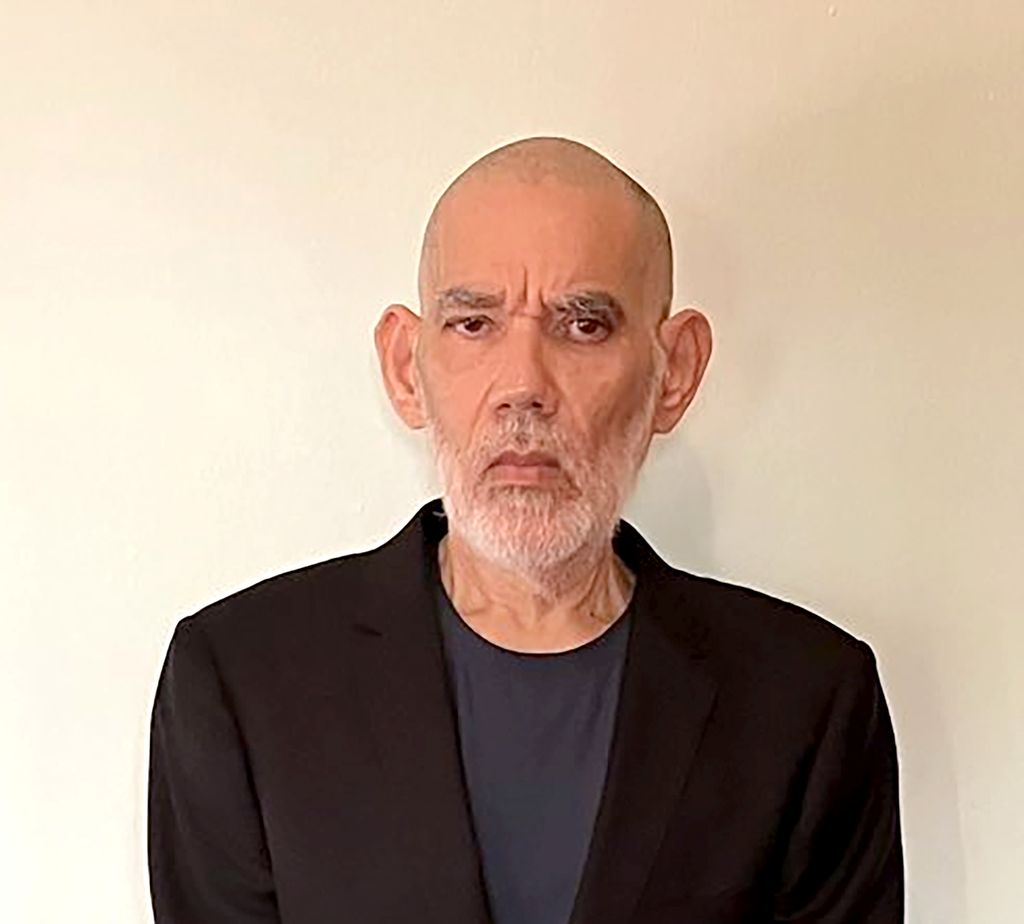
Even before Parliament convenes to debate the Government’s proposal to establish Zones of Special Operations (ZOSO) as a crime-fighting strategy, a criminologist is warning the approach will fail to address the roots of violent crime.
Criminologist Daurius Figueira was responding to Attorney General John Jeremie’s announcement that the Government will table the proposed legislation, titled The Law Reform (Zones of Special Operations) (Special Security and Community Development Measures) Bill, 2026, when Parliament meets today for the first time this year following the Christmas break.
The bill is intended to replace the ongoing State of Emergency, which is set to expire later this month. If passed, it would grant the Prime Minister the authority to designate high-crime communities as “Special Zones,” allowing for searches without a warrant and curfews of up to 72 hours.
Figueira acknowledged that the model was borrowed from Jamaica but said research shows it has failed to curb organised criminal activity there.
“My published research on Jamaica shows that the structure of the illicit trades in Jamaica, the operations of local transnational organised crimes and foreign transnational organised crime in Jamaica constitute an environment of criminality that ZOSOs are ineffective against,” he said.
He also dismissed claims that the decline in Trinidad and Tobago’s murder rate during the State of Emergency was evidence of the success of crime-fighting measures. The country recorded 369 homicides in 2025, compared with 626 in 2024, a decline of 42 percent.
Figueira said similar narratives have emerged in Jamaica, where murders fell below 700 last year for the first time since 1994. Jamaica’s Deputy Prime Minister and Minister of National Security and Peace, Dr Horace Chang, said the figure represented more than a 40 per cent year-on-year reduction, with over 470 lives spared compared with 2024.
According to Figueira, the declines in both countries are not the result of policy interventions but are instead linked to shifting dynamics among transnational criminal organisations.
“The glaring drop in the murder rate in Jamaica, as in T&T today, is the result of the Pax Mexicana effect, which is simply the operation of two transnational organised crime groups in Jamaica and T&T in competition with each other with both territories now under the control of two orders of power in conflict with each other—the Colombian Dons and Pax Mexicana. The fall in the murder toll is simply the stage before the final push for hegemony is unleashed,” he warned.
“In both Jamaica and T&T, states of exception no matter how formulated and unleashed simply cannot arrest this conflict when it returns to gun violence to determine which transnational organised group exerts hegemony over both Jamaica and T&T today. Already, the signs are forthcoming from the ground in T&T, that is, the engagement is once again heating up.”
Political analyst Dr Shane Mohammed acknowledged public concerns but said rising public frustration with crime has created political space for tougher measures.
“I believe we are at the stage in governance where the population is prepared to allow the Government to do what it needs to do to correct the wrongs that have been allowed to fester in the society for too long.”
Mohammed dismissed fears of political fallout but said the opposition was likely to challenge the bill on grounds of perceived targeting.
“It is going to become an argument that you’re targeting opposition and PNM constituencies. But there are hotspots across the island, and even hotspots in Tobago,” he said.
“Crime is not specific to a race in the country. Crime hits from Westmoorings all the way to Toco and down the highway into Point Fortin and Mayaro and across in Tobago.”
The Government has not identified which communities could be designated as Special Zones. However, during the People’s Partnership administration led by Prime Minister Kamla Persad-Bissessar, a State of Emergency was imposed with curfews in hotspot areas including Port-of-Spain, San Fernando, Arima, Chaguanas, Diego Martin and San Juan/Laventille, all of which were then represented by the PNM.
Laventille East/Morvant MP Christian Birchwood welcomed efforts aimed at improving public safety but raised concerns about the scope of authority the bill would place in the hands of the Prime Minister.
“The Prime Minister and the National Security Council should not be the sole authorities in declaring a zone. To lend true credibility to this process, the legal justification for a ZOSO declaration should be presented to a judge in chambers. This ensures that the ‘direction of travel’ is guided by law and objective necessity, rather than executive discretion alone.”
Birchwood also called for greater transparency through regular reporting.
“This report should track the entire cycle of the initiative, from police interventions to the DPP, through the judiciary, and into incarceration and reform. The population must see what the data is saying to ensure the process remains focused on results, not optics.”
Highlighting concerns about profiling and access to legal remedies, he warned against potential abuses.
“We must ensure that ‘special operations’ do not become a licence for the abuse of process. We need clear, accessible checks and balances that prevent bias from becoming the order of the day.”
He added that any sustained crime-fighting approach must prioritise community well-being.
“Ultimately, I am ready to support measures that are just and effective. However, it is prudent to further interrogate these variables to ensure that the pursuit of safety does not come at the permanent expense of the dignity and rights of the people of Laventille East/Morvant.”
A former senior executive member of the police service, speaking on condition of anonymity, offered a more supportive view, comparing the proposal to existing strategies.
“The IATF (Inter-Agency Task Force) approach, where there are special zones in which patrols are done, is something similar and has given success to Trinidad. By adding these aspects to it, you can only get positive results,” the source said.
He added that the Hearts and Minds Foundation, the community arm of the IATF, was designed to impact the social issues of hotspot communities, describing the measure as equally effective.
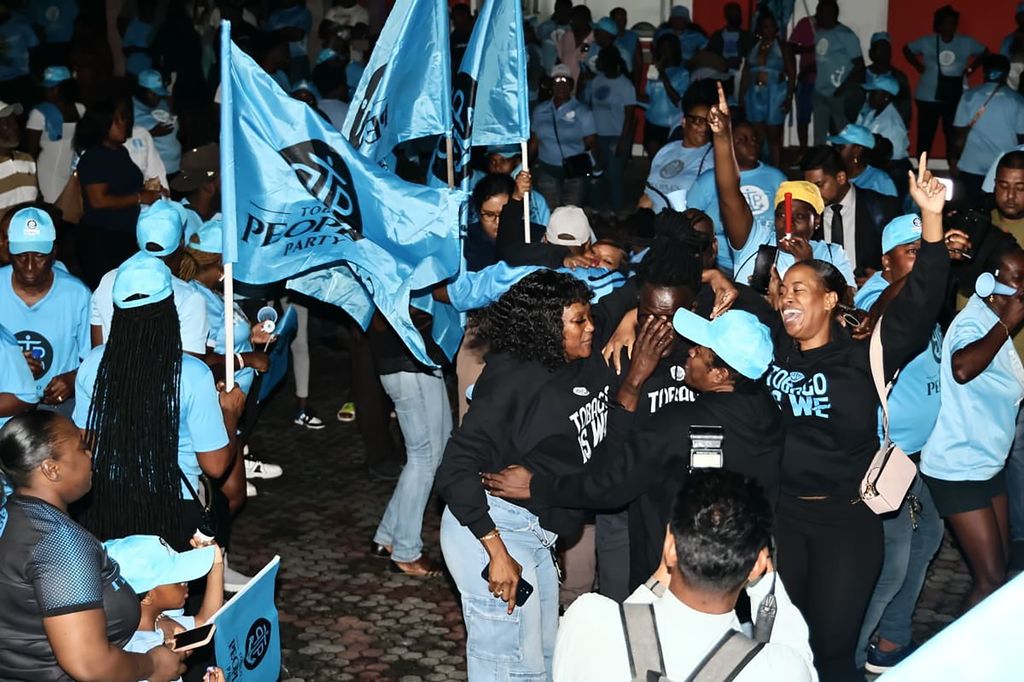
The proposed legislation requires a three-fifths majority in the House of Representatives to be passed, meaning at least 25 of the 41 members must vote in favour. With the Government holding 26 seats and the Tobago People’s Party holding two, the bill is expected to pass even without opposition support.
Attempts to obtain comment from the Police Commissioner and the Leader of the Opposition were unsuccessful.