
RADHICA DE SILVA
Senior Multimedia Reporter
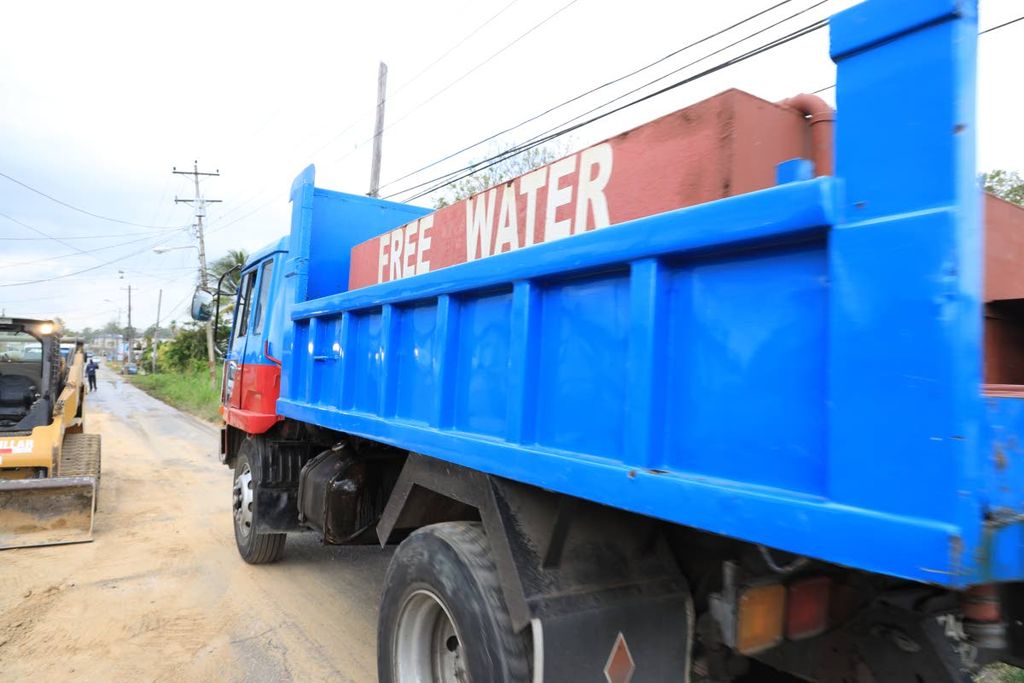
Public Utilities Minister Barry Padarath has issued a warning that mismanagement and corruption in water trucking will no longer be tolerated, as the Government rolled out four water trucking tank farms across South Trinidad to bring relief to residents during the dry season.
The facilities, established at a cost of just over $2 million, were launched in the constituency of Siparia, which Padarath said WASA data shows is the most underserved area in the country. The initiative follows protests by residents in parts of South Trinidad over prolonged water shortages.
“This administration will not tolerate the kind of mismanagement that has plagued water trucking in the past,” Padarath said. “That is why these tank farms are being rolled out with strict checks and balances, digitisation and direct ministerial oversight.”
Each of the four tank farms has a storage capacity of 20,000 gallons and will serve as a centralised hub for truck-borne water, reducing reliance on long-distance trucking and ensuring faster response times to communities that routinely go without pipe-borne supply for nine to 15 days, and in some cases up to a month.
Padarath said the programme is a short- to medium-term measure to provide immediate relief, particularly in southern, central and eastern Trinidad, where ageing WASA infrastructure has failed to keep pace with demand.
A key feature of the initiative is a digitised operating system to monitor the opening and closing of valves, preventing individual control and reducing opportunities for abuse. The minister said this will be backed by personnel on the ground, weekly reporting requirements and security systems, including cameras, to safeguard the water supply.
“We are using technology, but we are not depending on technology alone,” Padarath said. “There will be human oversight, spot checks and weekly reports so we know exactly where the water is going and who is benefiting.”
As part of the crackdown on irregularities, Padarath also announced the establishment of a new hotline at the Ministry of Public Utilities, separate from WASA, where citizens can report problems with water schedules and truck-borne deliveries.
“The ministry will now hold WASA accountable,” he said. “If water schedules are not met, we will find out why. We cannot separate ourselves from the state enterprises under our purview and then expect citizens to suffer in silence.”
Chairman of the Penal/Debe Regional Corporation, Gowtam Maharaj, said the tank farms will bring much-needed relief to communities where residents often struggle to get even a drop of water for cooking.
“This will serve areas like Platonique, Rochard Road, Ramsing Trace, Ramsabag Trace, Marble Trace, parts of Old Clarke Road and several high-point communities where pipe-borne water does not reach,” Maharaj said. “A lot of people are going to benefit. This is a very joyful moment.”
Padarath said the Siparia rollout is the first phase of a wider programme, with similar tank farms planned for Moruga/Tableland, Mayaro and other rural constituencies. He also confirmed that Cabinet is expected to consider the construction of three new desalination plants as part of a longer-term solution to the country’s water crisis.
“For now,” the minister said, “the message is clear: relief is coming for south Trinidad, and mismanagement in water trucking will no longer be accepted.”