
DAREECE POLO
Senior Reporter
dareece.po[email protected]
Trinidad and Tobago nationals are exempt from the list of 75 countries affected by a United States decision to suspend the processing of certain visas.
The restriction applies only to immigrant visas, commonly referred to as green cards, and does not affect tourist, business, student or other non-immigrant visa categories.
The decision was announced by the US Department of State yesterday and is scheduled to take effect on January 21, with no end date announced.
The pause follows a decision by the State Department last year to tighten checks under the “public charge” provision of US immigration law.
The move targetted applicants that the Trump administration viewed as potentially dependent on state support.
During this upcoming suspension, US authorities intend to review immigration screening processes to limit the admission of foreign nationals expected to rely on welfare or other public assistance.
Of the fifteen Caricom member states, twelve are affected by the measure. They include Antigua and Barbuda, the Bahamas, Barbados, Belize, Cuba, Dominica, Grenada, Haiti, Jamaica, St Kitts and Nevis, Saint Lucia and St Vincent and the Grenadines.
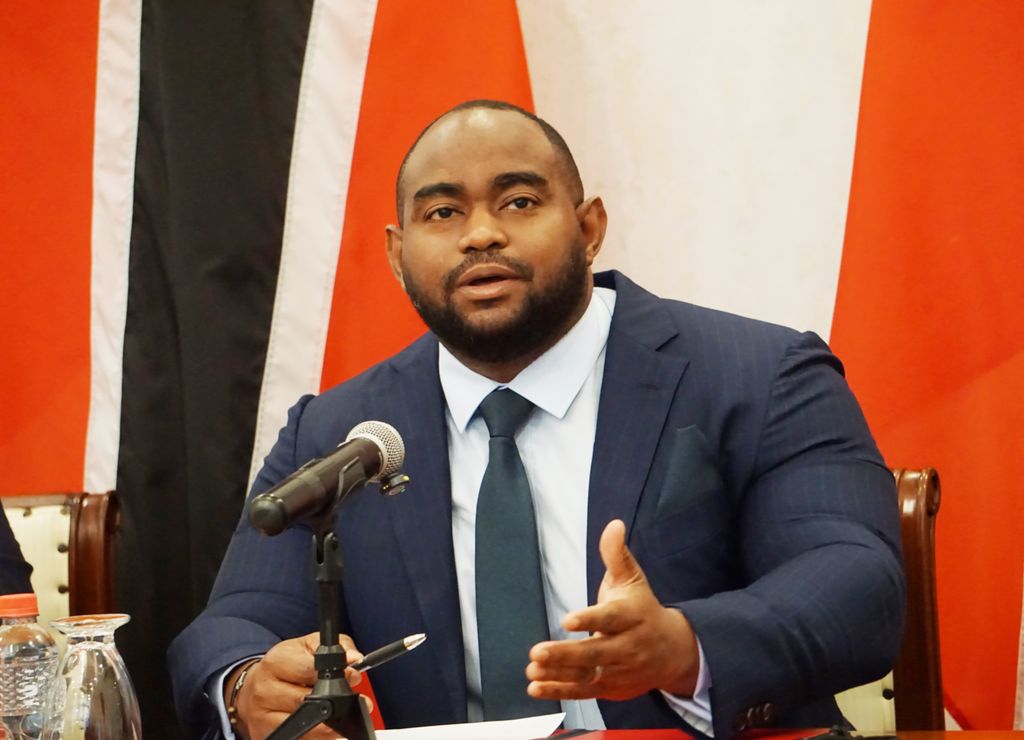
Reacting to the announcement, Foreign Affairs Minister Sean Sobers said Trinidad and Tobago played no role in the decision.
“The Government of the Republic of Trinidad and Tobago is neither involved in, nor able to influence the immigration and visa policies of the Government of the United States, which remains a sovereign matter,” Sobers said in a WhatsApp response to Guardian Media.
He added: “Trinidad and Tobago values our longstanding friendship and strong relations with the United States and remains committed to continued cooperation and engagement in areas of mutual interest for the benefit of both nations.”
State Department documentation notes that routine visa services were suspended during the covid19 pandemic, disrupting both immigrant and non-immigrant processing, with limited services resuming from July 2020. Despite those disruptions, seven Caricom countries were listed as recipients of immigrant visas in 2024, totalling 51,168 people.
Trinidad and Tobago accounted for 1,292 of those visas.
The countries included the Bahamas, Barbados, Belize, Guyana, Haiti, Jamaica, T&T and Cuba.
International relations experts Professor Anthony Bryan and Dr Anthony Gonzales both described the move as a sovereign decision by Washington.
Bryan said he does not believe the affected countries are being punished for opposing US foreign policy.
“Any country is free to impose whatever restrictions it wishes for whatever reason it wants. And that is entirely the case here. We are just caught in the dragnet, apparently. So I don’t put any ominous reasons behind it. You know, it is what it is.”
Gonzales said he understood the rationale behind the policy.
“You know, a lot of people apply for these things, and then they go up to the United States, and they try to live off of a lot of public welfare. They try to get cash grants, or they may get free lunch at schools, or they may get, depending, of course, on where they go to the US states, they could get certain health services, education services and so forth. So I think what they’re trying to do is to determine where these people are, which countries tend to send a lot of these people.”
“I’m not sure it is entirely based upon pure foreign policy considerations. They would have had to look at—do their research.”
Meanwhile, Antigua and Barbuda’s ambassador to the United States, Sir Ronald Sanders, acknowledged reports of his country’s inclusion on the list and said he has already made representations to Washington, despite the absence of formal notification.
“Upon becoming aware of these reports, I made immediate inquiries with the United States Department of State. As of this moment, no formal announcement has been made, and no official communication has been issued to the Embassies of the countries reportedly affected.”
“In the meantime, the Government of Antigua and Barbuda continues its representations to the relevant United States authorities to secure the removal of Antigua and Barbuda from the list of countries subject to partial visa restrictions, including the requirement for certain visa applicants to post a bond. These efforts remain ongoing and active.”
Sir Ronald said he was advised by senior State Department officials that the issue stems from a new requirement under direction of the White House, stressing that his information came from direct conversations rather than a formal written directive. He also underscored that governments have no legal role in individual immigration cases.
“It is also important to clarify that applications for immigration to the United States are matters exclusively between the individual applicant and the Government of the United States. The country of nationality or origin of an applicant has no legal or administrative role in decisions relating to the grant or refusal of immigrant status.”
Guardian Media sought comment from Caricom chair and St Kitts and Nevis Prime Minister Dr Terrance Michael Drew, but efforts were unsuccessful.
Attempts to contact Prime Minister Kamla Persad-Bissessar also obtained no response.
US immigrants visa issued:
2024
Trinidad and Tobago – 1,292
The Bahamas – 326
Barbados – 1,494
Belize – 281
Guyana – 2,837
Haiti – 3,175
Jamaica – 17,193
Cuba – 24,570
2023
Trinidad and Tobago – 1,309
The Bahamas – 381
Barbados – 1,420
Belize – 268
Guyana – 14,170
Haiti – 10,071
Jamaica – 11,824
Cuba – 28,143