
Senior Reporter
geisha.kow[email protected]
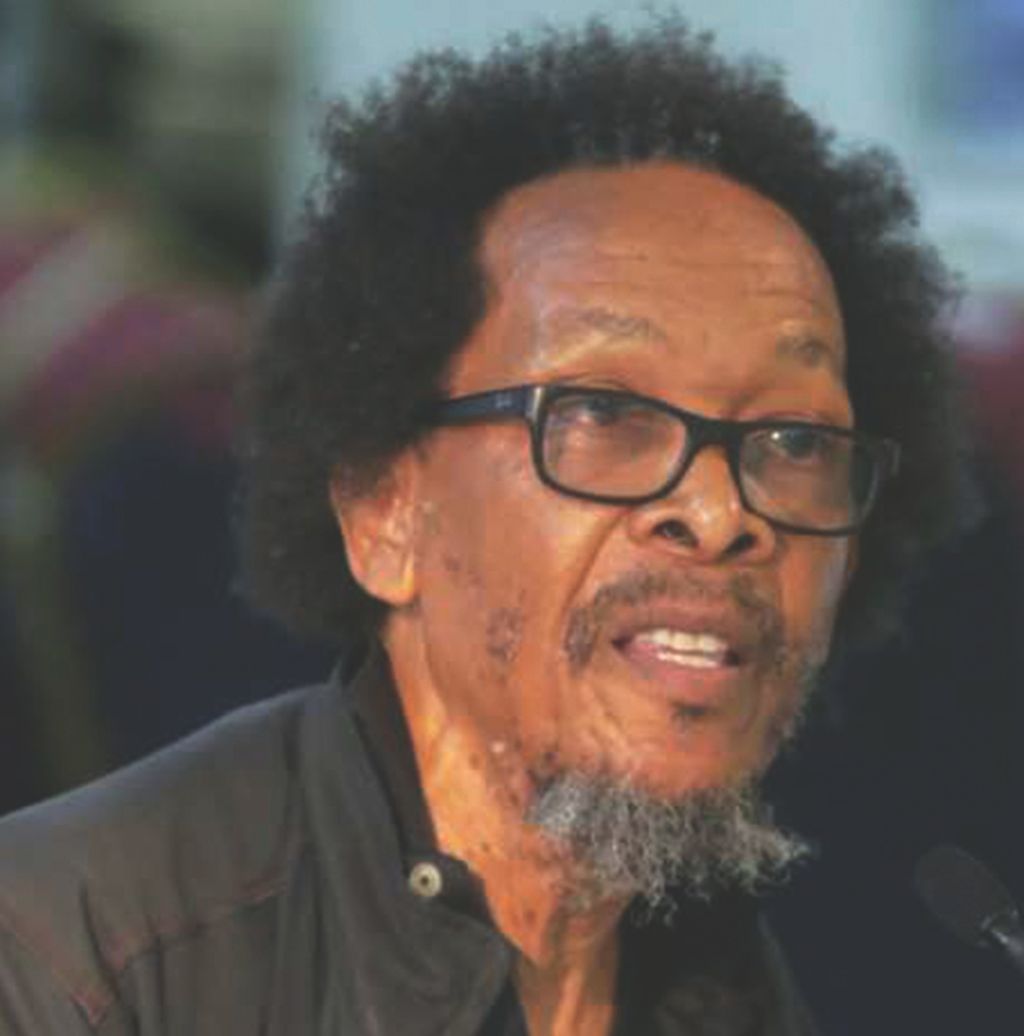
As Tobago heads into another election cycle, economist Dr Vanus James has issued a stark warning: without fundamental changes to how the Tobago House of Assembly (THA) and central government approach development, the island risks remaining underdeveloped indefinitely.
Speaking on the state’s role in entrepreneurship and economic diversification, James argued that the Government is ill-equipped to drive “Golden, high profit-making entrepreneurship”—the kind of ventures that could transform Tobago’s economy.
“You can’t do development under those conditions. If you don’t want to face it as a country, you’re just making the decision to stay underdeveloped forever,” he said.
James pointed to data showing that only 16.4 per cent of this country’s workforce holds university degrees, with Tobago lagging further behind at 13 per cent and falling.
For meaningful development, he explained, that figure must rise to at least 38 per cent, a threshold identified by the Central Statistical Office (CSO) as the “turnaround point” for economic transformation.
Reflecting on Tobago’s political history, James noted that the THA has spent 45 years attempting to develop the island’s economy, with little success.
The problem, he argued, lies in the structural dependence on central government policies.
“Central government says educate for the local population. That’s policy. Even if the THA knew better, it could not change that to focus on public education for export,” he said, as he explained that key levers such as visas, foreign investment rights and trade arrangements remain firmly under central government control.
“The central government policy is a sword of Damocles around the necks of the administrative regions, in Trinidad as well as Tobago,” James stated.
He also criticised the lack of mechanisms for Tobago’s districts to influence national policy.
“Right now, they may have a view, but they have no mechanism to communicate it. The Constitution is not organised for that. It’s Cabinet and the Opposition—and talking to the Opposition is a waste of time. There is no way to talk to Cabinet,” he said.
This disconnect, he argued, explains why diversification has stalled across both islands.
“The mechanisms of diversification and development are all essentially controlled by the central government. Even if the THA has room to act, it’s limited room, and the habits of politicians and administrators are to depend on central government,” he stated.
“Tobago’s economy cannot move forward without joint policymaking between the THA and central government, enshrined in legislation. Not where Farley could go sit down and talk to Kamla—not that kind of thing. You’re talking about policy driven by law, by a properly designed parliament. You don’t have that,” he further explained.
Until such reforms are made, he warned, Tobago will remain trapped in a cycle of dependence and underdevelopment.