1,700 tickets in 6 days: Minister says increase in fines due to ‘alarming’ incidence of lawlessness on roads
 07 January 2026

Jesse Ramdeo
Senior Reporter
Transport and Civil Aviation Minister Eli Zakour says Government’s decision to impose stiffer road traffic fines was driven by evidence uncovered after taking office, insisting the scale of lawlessness on the nation’s roads was far worse than what was understood during the election campaign.
Addressing criticism over why the United National Congress administration had made an about-turn on its pre-election position not to increase traffic fines, Zakour said once in Government, access to detailed reports and enforcement data painted a disturbing picture of widespread indiscipline and weak compliance with basic road laws.
“On the campaign trail, we did not have access to the operational data, the statistical data. But since assuming office, we have access to all data, and the lawlessness is worse than what we thought, so the Government had to act decisively,” Zakour said at a media conference at the United National Congress (UNC) headquarters in Chaguanas.
Guardian Media also obtained data from the Trinidad and Tobago Police Service yesterday, showing that for the first week since the rollout of the increased traffic fines, 1,758 various traffic tickets were issued. For the corresponding period in 2025, 1,682 tickets were handed out to offenders, while in 2024 it was 1,688.
Under the amended Motor Vehicles and Road Traffic Act, fines previously set at $1,000 have been increased to $2,000; $750 fines doubled to $1,500; $300 fines raised to $600; and $450 fines increased to $900.
In other cases, higher penalties were adjusted upward, including $2,000 fines increased to $4,000, and tiered penalties for repeat offences raised across the board.
As he also defended the Government’s decision to increase fines for late driver’s permit renewals, Zakour pointed to what he described as a “frightening” development.
“This is very serious. In the last two days, close to 1,000 persons came into License Office to renew their driver’s permits, which should have been done within the legal time frame. We are seeing cases where persons are months or even years overdue.”
He insisted that the amended legislation was rolled out and implemented transparently amid concerns from the public.
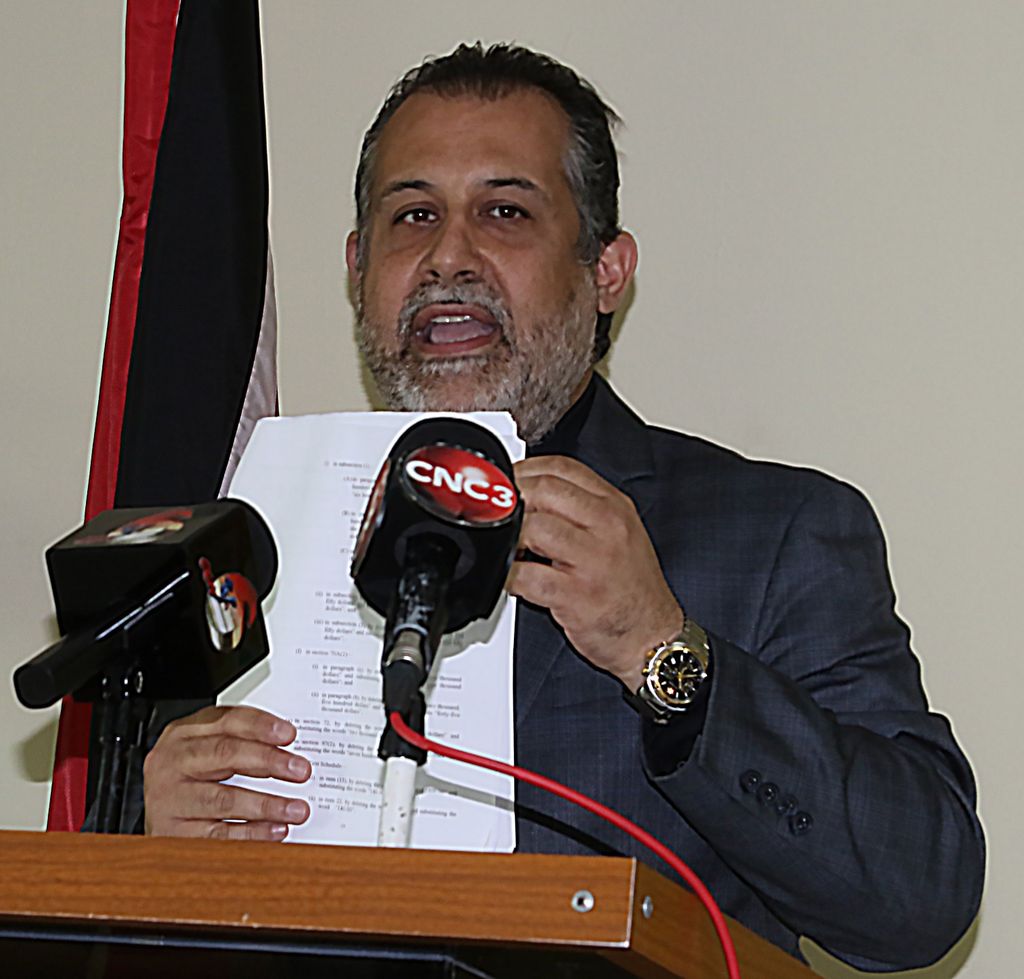
“I am holding here the Finance Bill, 2025, that was debated in both houses of Parliament on December fifth and December ninth. Section 61a, right here. This was debated in Parliament, and I actually spoke on this on December ninth.”
Zakour again rejected suggestions that the increased fines were designed to raise revenue.
“We cannot be subject to a popularity contest when lives are at stake, so the Government acted. This is not a revenue exercise; if this works as intended, the Government will collect less because there will be less violations,” he said.
The minister, however, noted that in the last two years alone, over ten million dollars in late renewal fees were collected.
“In the last financial year, we received five million dollars in late driving permit fees and nine million the year before, so this is not new.”
The minister also acknowledged the challenges experienced by the public at Licensing offices across the country.
“Currently, we are experiencing some system challenges at License offices where the systems are going offline. Yesterday, it happened a couple of times for six or so minutes. This is being addressed, but it is a system we inherited.”
The minister also noted that the previous demerit point system had failed to achieve its intended objective of improving road safety.
“When evidence shows that penalties have lost their effectiveness and dangerous driving persists, the Government has to act.”
It comes even after the police recorded a 12 per cent reduction in road fatalities for 2025 when compared to 2024.
Zakour asserted that under the demerit point system launched in 2020 by the previous People’s National Movement administration, “road behaviour remained unchanged.”
Addressing concerns about police accountability during road traffic exercises, Zakour assured further clarity.
“Persons have brought to our attention concerns regarding a cracked windscreen and a blown light bulb, among others. This is being discussed, and I will have more on this soon.”
Zakour also announced plans to introduce red light enforcement technology.
“Cameras will be placed at traffic intersections throughout the country and will take photos of your vehicle breaking the light. We are working on that very soon.”
Related News
TPP under fire as MP supports controversial traffic fines

Foreign Affairs Minister defends government’s stance on Venezuela
Venezuela AG condemns US, urges UN intervention