Dominica willing to serve as mediator in US-Venezuela conflict, says Skerrit
 15 December 2025

Dominica’s Prime Minister Roosevelt Skerrit said Monday that his country is prepared to act as a mediator in the current conflict between the United States and Venezuela, reiterating that the Caribbean region should always be a zone of peace.
Speaking at the end of year news conference, PM Skerrit told reporters that Dominica and the wider Caribbean Community (CARICOM) region is urging “dialogue and diplomacy” to deal with the situation, given that “there would be an impact on every country” should there be a war in the Caribbean.
“Dominica is a good friend of both the United States and Venezuela, and in the past we have worked together as an intermediary,” he stated, “and we are prepared to do so in this current situation if there are messages from either side to each other.”
“Dominica believes it is well placed to provide that service. But we hope and pray that nothing happens and the U.S. President himself has been involved in a number of negotiations across the world and has used the U.S.’s influence to bring a number of conflicts to an end,” Skerrit said, adding “I would urge the United States to draw upon that trajectory to advance that noble cause and actions that he has been able to achieve over the years.”
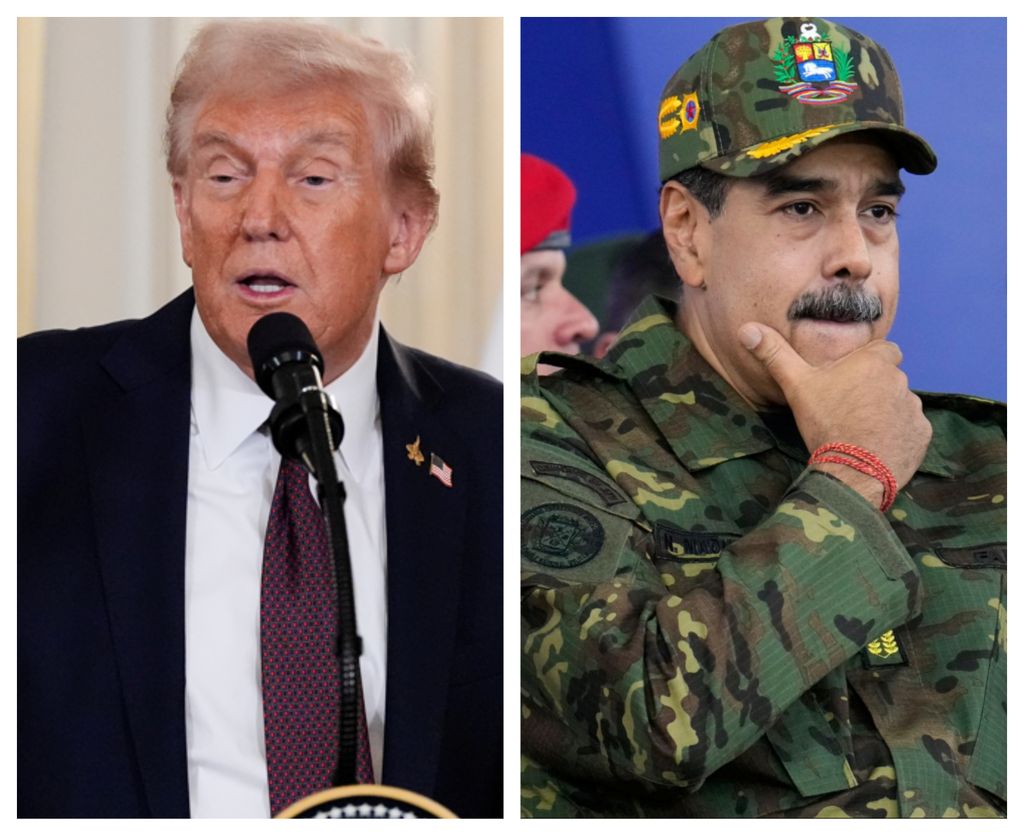
Since September, the Donald Trump administration has carried out a series of military strikes off the coast of Venezuela, across the Caribbean and the Eastern Pacific as part of what it terms the war on illegal drugs.
But political observers say President Trump is involved in regime change in Caracas, given his public statements made about President Nicolas Maduro—whom he has labelled as a narco-terrorist—and the build-up of military assets in the international waters near the South American country.
The U.S. military has carried out several hits on vessels, killing more than 80 people (including two Trinidad and Tobago nationals), without providing any proof that they were engaged in drugs.
The United Nations High Commissioner for Human Rights also strongly condemned the airstrikes carried out by the United States against alleged drug trafficking boats in the Caribbean and the Pacific.
Volker Türk said in a statement that the strikes “violate international human rights law”, demanding that they be stopped immediately.
Earlier this month, the Inter-American Commission on Human Rights (IACHR) has expressed its “deep concern” regarding reports of lethal operations against non-state vessels or boats conducted by the United States in the Caribbean Sea and the Eastern Pacific Ocean since early September.
The IACHR said that these operations have allegedly resulted in the deaths of “a high number of persons”. The organisation urged Washington to ensure that all security operations, including those carried out beyond its borders, “are consistent with international human rights obligations, particularly regarding the protection of the right to life, the use of force, due process guarantees, and accountability mechanisms”.
CARICOM has also issued a statement reiterating the need for the region to be a zone of peace, but the statement was not endorsed by the Trinidad and Tobago government, whose Prime Minister has said that those involved in the illegal drugs trade should be “killed violently”.
Regarding the presence of the U.S. military in Caribbean waters, Dominica’s Prime Minister Roosevelt Skerrit told reporters Dominica and the wider Caribbean have enjoyed “excellent collaboration” with Washington in fighting illicit activities in the region.
“The U.S. has been the number one partner of Dominica and continues to be, even today in terms of their investment in Dominica for national security,” he said. He noted that a radar had been made available to the island “to deal with our marine spaces and that was recently installed.”
“There are a number of other major infrastructural projects … that the Americans are financing … and other matters where national security is concerned. So on the issue of fighting crime and so on, the U.S. is our partner,” PM Skerrit said.
“We always maintain that the Caribbean should be a zone of peace and that any thought of military actions in the Caribbean should be reconsidered,” he said. “We believe that dialogue and diplomatic channels are better ways to solve problems, differences, views that do not coincide—and this is what we are urging in the circumstance,” PM Skerrit told reporters.
He added: “Certainly, if there is a breakout anywhere in the Caribbean Sea it will have a negative impact on all of us.” —ROSEAU, Dominica (CMC)