Vatican commission again says no to ordaining women as deacons, but urges other ministries
 04 December 2025

A second Vatican study commission has determined that women should not be ordained as deacons, dealing another setback to Catholic women who hope one day to be able to preside at weddings, baptisms and funerals.
The Vatican on Thursday took the unusual step of publishing a synthesis of the commission’s findings, including the members’ votes on specific theological questions. The report left open the possibility of further study but proposed instead the creation of new lay ministries for women outside the ordained diaconate, suggesting that the issue for now is closed.
Deacons are ordained ministers who perform many of the same functions as priests, presiding at weddings, baptisms and funerals. They can preach but cannot celebrate Mass.
For male seminarians, the diaconate is a transitional ministry on their way to being ordained as priests. Married men can also be ordained as permanent deacons. Women cannot, although historians say women served as deacons in the early Christian church.
Pope Francis in 2016 ordered a first study commission on the issue following a request from the umbrella organization of the world’s female religious orders, the International Union of Superiors General. After that commission apparently failed to reach consensus, Francis created a second study commission in 2020, named for its president, president Cardinal Giuseppe Petrocchi, which released its report Thursday.
The members were not identified. Petrocchi though concluded that there are two currently irreconcilable schools of theological thought on the question, requiring the Vatican to take a prudential approach. One school of thought would allow for a female diaconate, while the other would not.
Given the impasse, the current state of research “rules out the possibility of moving in the direction of admitting women to the diaconate understood as a degree of the sacrament of Holy Orders” the report said.
But it left open the possibility for further study, saying the current state of investigation doesn’t allow for a “definitive judgment to be formulated.”
Some Catholic women want ministerial recognition
Catholic women do much of the church’s work in schools and hospitals and are usually responsible for passing the faith to the next generation. But they have long complained of second-class status in an institution that reserves the priesthood for men.
In many parts of the world, they have pressed for greater roles in both decision-making management jobs and ministerial vocations.
Discerning Deacons, a U.S.-based group pressing for the ordination of women deacons, expressed disappointment at the report’s conclusions. It called for a “wider, more inclusive process” to keep studying the issue and vowed to carry on advocating.
“The Petrochi Commission’s findings reflect only a small sampling of the church,” the group said in an emailed statement to The Associated Press. “We believe a wider, more inclusive process — one that takes seriously the experience and vocation of women — is needed. This moment invites deeper listening, not closure.”
Women’s Ordination Conference, a U.S.-based group that advocates for women priests, said it was “appalled” by the Vatican’s “refusal to open its doors to women, even a crack. Make no mistake: this is a decision that will harm the global church,” the group said.
Advocates for expanding the diaconate to include women say doing so would provide women with greater role in the ministry and governance of the church, while also helping address the effects of the Catholic priest shortage in parts of the world by allowing women to perform some priestly functions.
Opponents say ordaining women to the deaconate would signal the start of a slippery slope toward ordaining women to the priesthood. The Catholic Church reserves the priesthood for men, saying Christ chose only men as his 12 Apostles.
Francis had been comfortable allowing debate on the issue while punting any definitive decision. The female diaconate was discussed during his 2019 Amazon synod, or meeting of bishops, and again during Francis’ bigger yearslong reform synod, which in 2024 called for the question to remain open.
But a special study group on women deacons within the synod framework turned its research over to the Petrocchi commission earlier this year, essentially ending its work. Petrocchi noted that the issue was only relevant in a few countries and only 22 submissions had been received, saying that was hardly representative of the global church.
Leo seems noncommittal on issue
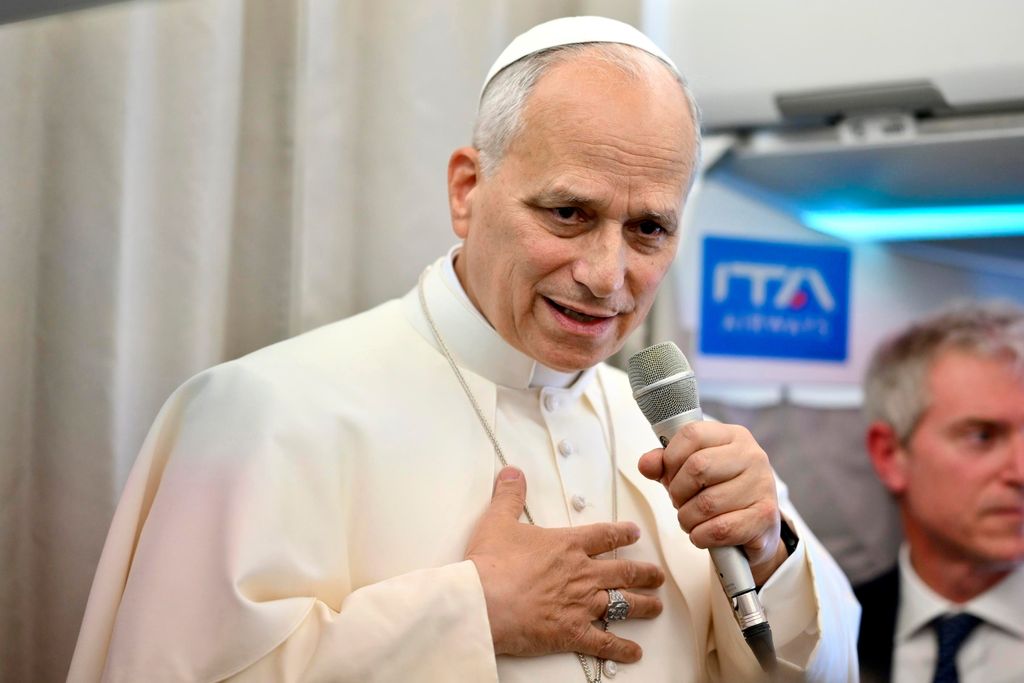
Pope Leo XIV ordered Petrocchi’s synthesis report released, and that could suggest that for him the issue is now closed. Leo has spent much of his first months as pope tying up the loose ends of Francis’ pontificate, and the women deacon issue remained an outstanding question.
The former Cardinal Robert Prevost has said previously that women cannot be ordained as priests, and has seemed noncommittal on whether women could ever serve as deacons.
During a 2023 press conference, Prevost acknowledged that Francis had created the two study commissions but he warned that turning women into clerics “doesn’t necessarily solve a problem, it might make a new problem.”
Phyllis Zagano, a researcher at Hofstra University in New York and a member of the original 2016 commission, complained that the document issued Thursday “does its best to present the topic in a negative light” by arguing that “since women are barred from priestly ordination, they may not be ordained as deacons.”
“The long report does not present evidence or a theological argument, only the opinion that more study is needed. In short, they cannot say ‘no,’ they simply do not want to say ‘yes,’” she said in a statement.
ROME (AP)