
Senior Reporter
otto.carring[email protected]
A growing chorus of trade union leaders is denouncing recent statements suggesting that only politically aligned unions—or those that pursued litigation—should benefit from improved wage offers, warning that such a shift threatens to destabilise the country’s long-standing industrial relations framework.
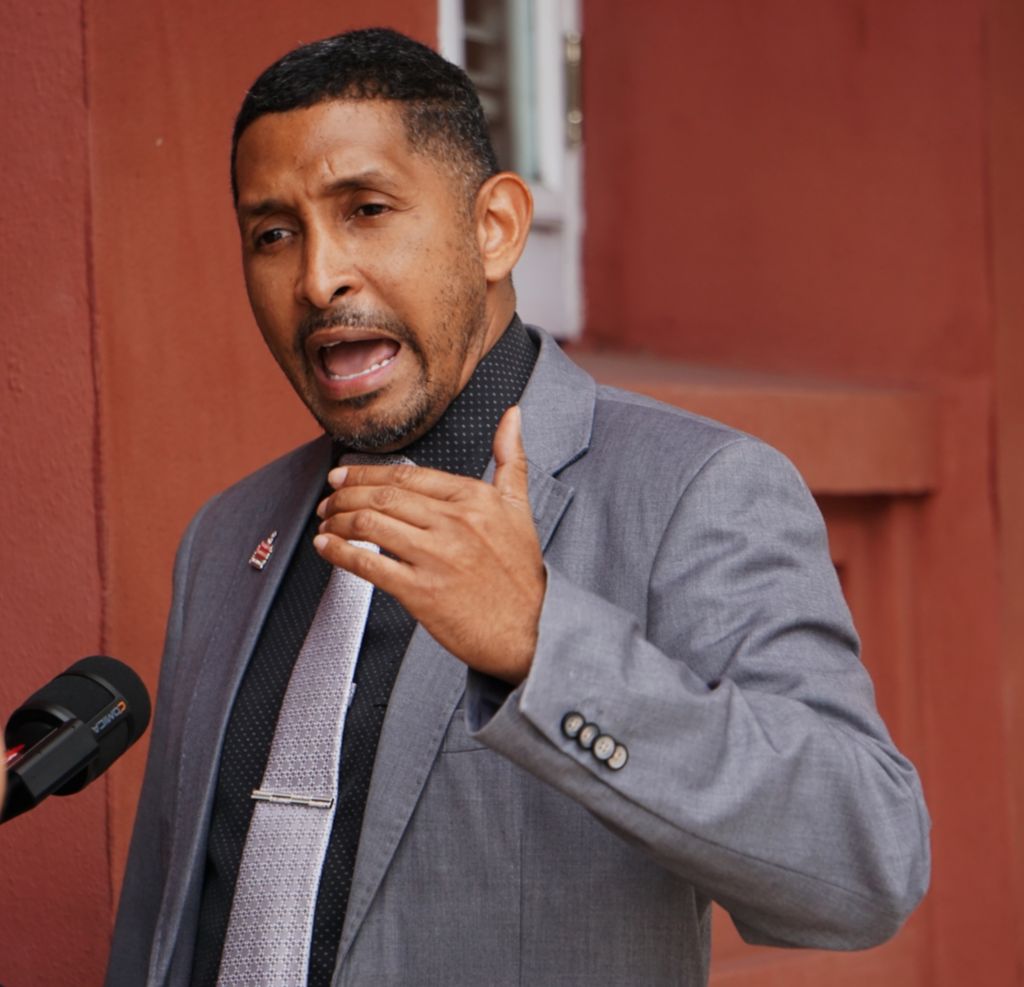
The backlash was triggered by comments from Minister in the Ministry of Public Utilities and former trade unionist Clyde Elder, who implied that TSTT workers and other groups may not be entitled to a proposed ten per cent increase because their unions do not belong to what he described as a “coalition of interest.”
The Communications Workers’ Union (CWU) was first to respond, accusing Elder of pushing a narrative that undermines labour independence and risks converting collective bargaining into a politically driven exercise.
CWU Secretary General Joanne Ogeer said Elder’s stance was “deeply troubling” and contrary to the principles he once defended.
“No union leader—past or present—should imply that workers ought to be penalised because their union refuses to align politically,” Ogeer said, warning that such a mindset opens the door to “political coercion” disguised as industrial policy. She added that when labour leaders appear to support State agendas, it erodes worker trust and creates conditions ripe for conflict.
That concern was echoed by Estate Police Association (EPA) President Deryck Richardson, who described the suggestion of selective increases as “a dangerous deviation” from national compensation norms. He argued that segmenting workers by administrative category or perceived political loyalty sets a precedent that could fracture the public sector.
“Compensation should reflect duties, responsibilities, and the cost of living, not participation in political or strategic alliances,” Richardson said, adding that excluding state-enterprise workers—many already earning below market rates—would only deepen inequality.
Prison Officers’ Association (POA) President Gerard Gordon also rejected Elder’s remarks, calling them “fundamentally unfair.” He said unions like his accepted the previous four per cent settlement under coercive conditions, including the threat of a decade-long tribunal judgment, not because the offer was just.
“To now hold those decisions against us is unjust,” he said, stressing that the POA is not seeking to reopen past agreements but expects timely negotiations for outstanding periods. Gordon warned that implying only certain unions deserve better adjustments risks creating division within the labour movement and disregards the sacrifices made by frontline officers.
Steel Workers’ Union (SWUTT) President Timothy Bailey added to the criticism, saying the claim that political alignment could influence wage outcomes is “deeply troubling” and contradicts the very foundations of collective bargaining. He cautioned that reducing negotiations to political reward or punishment would encourage a culture of “collective begging” rather than principled advocacy.
Bailey noted that the PSA’s recent ten per cent settlement—achieved through negotiation and action—now forms the benchmark for other unions, consistent with longstanding custom and practice.
Labour representatives insisted that wage negotiations must remain free of political interference, transparent, and grounded in fairness. Any attempt to condition wage justice on political alignment, they warned, risked undermining worker confidence, destabilising industrial peace, and weakening democratic accountability.
Related News
Duke mum on PDP’s plans for THA election
New NHSL chairman faces scrutiny over previous fraud-related charges

Nations and environmental groups slam proposals at UN climate talks, calling them too weak