US set to label Maduro-tied Cartel de los Soles as a terror organisation
 24 November 2025
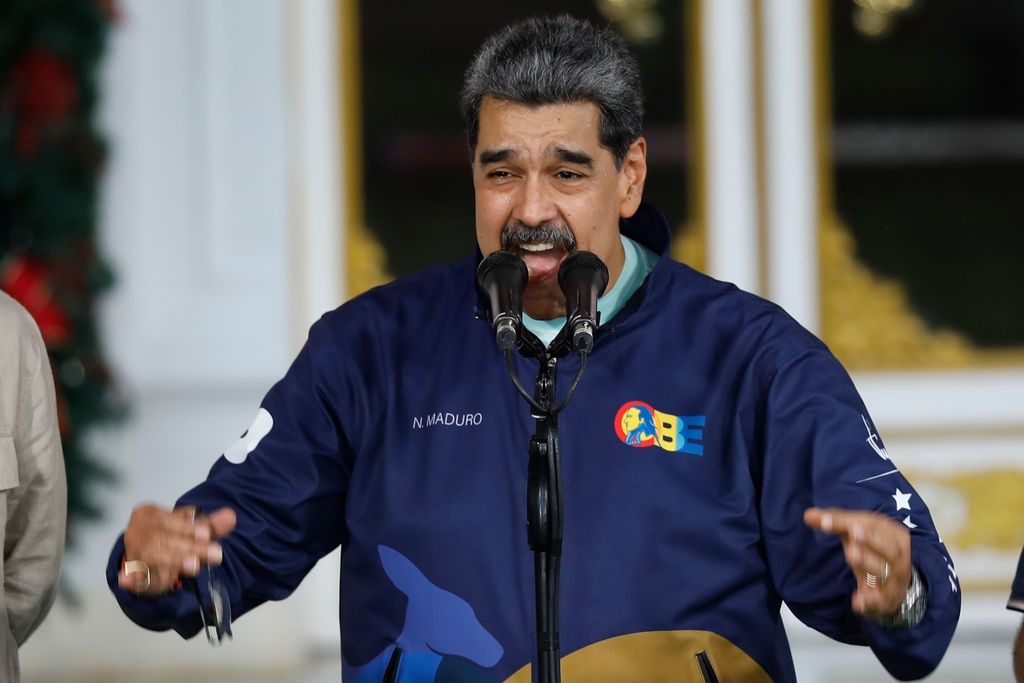

President Donald Trump’s administration is set to ramp up pressure on Venezuelan President Nicolás Maduro on Monday by designating the Cartel de los Soles as a foreign terrorist organisation. But the entity that the U.S. government alleges is led by Maduro is not a cartel per se.
The designation is the latest measure in the Trump administration’s escalating campaign to combat drug trafficking into the U.S. In previewing the step about a week ago, U.S. Secretary of State Marco Rubio accused Cartel de los Soles, or Cartel of the Suns, of being “responsible for terrorist violence” in the Western Hemisphere.
The move planned for Monday comes as Trump evaluates whether to take military action against Venezuela, which Trump has not ruled out despite bringing up the possibility of talks with Maduro. Land strikes or other actions would be a major expansion of the monthslong operation that has included a massive military buildup in the Caribbean Sea and striking boats accused of trafficking drugs, killing more than 80 people.
Venezuelans began using the term Cartel de los Soles in the 1990s to refer to high-ranking military officers who had grown rich from drug-running. As corruption later expanded nationwide, first under the late President Hugo Chávez and then under Maduro, its use loosely expanded to police and government officials as well as activities like illegal mining and fuel trafficking. The “suns” in the name refer to the epaulettes affixed to the uniforms of high-ranking military officers.
The umbrella term was elevated to a Maduro-led drug-trafficking organisation in 2020, when the U.S. Justice Department in Trump’s first term announced the indictment of Venezuela’s leader and his inner circle on narcoterrorism and other charges.
“It is not a group,” said Adam Isaacson, director for defence oversight at the Washington Office on Latin America organisation. “It’s not like a group that people would ever identify themselves as members. They don’t have regular meetings. They don’t have a hierarchy.”
Trump’s expansion of terror label to cartels
Up until this year, the label of foreign terrorist organisation had been reserved for groups like the Islamic State or al-Qaida that use violence for political ends. The Trump administration applied it in February to eight Latin American criminal organisations involved in drug trafficking, migrant smuggling and other activities.
The administration blames such designated groups for operating the boats it is striking but rarely identifies the organisations and has not provided any evidence. It says the attacks, which began off the coast of Venezuela and later expanded to the eastern Pacific Ocean, are meant to stop narcotics from flowing to American cities.
But many — including Maduro himself — see the military moves as an effort to end the ruling party’s 26-year hold on power.
Since the arrival of U.S. military vessels and troops to the Caribbean months ago, Venezuela’s U.S.-backed political opposition also has reignited its perennial promise of removing Maduro from office, fueling speculation over the purpose of what the Trump administration has called a counterdrug operation.
Trump, like his predecessor, does not recognise Maduro as Venezuela’s president.
Maduro is on his third term in office after ruling-party loyalists declared him the winner of last year’s presidential election despite credible evidence that the opposition’s candidate defeated him by a more than 2-to-1 margin. He and senior officials have been repeatedly accused of human rights violations of real and perceived government opponents, including in the aftermath of the July 2024 election.
Hegseth says designation offers ‘new options’
U.S. Defence Secretary Pete Hegseth said last week that the upcoming designation of Cartel de los Soles will provide a “whole bunch of new options to the United States” for dealing with Maduro. But Hegseth, speaking in an interview with conservative news outlet OAN, did not provide details on what those options are and declined to say whether the U.S. military planned to strike land targets inside Venezuela.
“So nothing is off the table, but nothing’s automatically on the table,” he said.
Trump administration officials have signalled that they find it difficult to see a situation in which Maduro remaining in power could be an acceptable end-game. But as Trump considers an array of military and non-military options, including covert action by the CIA, for next steps, there is strong belief inside the administration that Maduro’s rule “is not sustainable,” according to a senior administration official who was not authorised to comment publicly on the sensitive matter.
The official added that Trump has been keenly listening to his intelligence team, which has reported to him that chatter picked up inside Venezuela indicates growing anxiety from Maduro and other high-level Venezuelan officials as the U.S. strikes continue. Trump, the official said, is “very content and satisfied” for the moment with the strikes’ impact.
All the while, pleas from Maduro and others close to the Venezuelan leader to speak directly to the administration, relayed through various intermediaries and channels, seem to be more frantic, the official said. But Trump has not sanctioned any intermediaries to speak to Maduro on behalf of the U.S. administration.
Indictment alleges conspiracy to ‘flood’ US with drugs
The 2020 indictment accused Maduro, Interior Minister Diosdado Cabello and Defence Minister Vladimir Padrino López, among others, of conspiring with Colombian rebels and members of the Venezuelan military for several years “to flood the United States with cocaine” and use the drug trade as a “weapon against America.” Colombia is the world’s top cocaine producer.
Before laying down weapons as part of a 2016 peace deal, members of the Revolutionary Armed Forces of Colombia, or FARC, regularly used the porous border region with Venezuela as a safe haven and hub for U.S.-bound cocaine shipments — often with the support or at least consent of Venezuelan security forces. Dissidents continued the work. Colombia’s National Liberation Army guerrilla is also involved in the illegal trade.
Maduro has denied the charges. The U.S. Justice Department this year doubled to $50 million the reward for information that leads to Maduro’s arrest.
Maduro has insisted that the U.S. is building a false drug-trafficking narrative to try to force him from office. He and other government officials have repeatedly cited a United Nations report that they say shows traffickers attempt to move only 5% of the cocaine produced in Colombia through Venezuela.
The U.S. Treasury Department imposed sanctions on the Cartel de los Soles in July, saying Maduro and his top allies had bent the power of the Venezuelan government, military and intelligence services to assist the cartel in trafficking narcotics to the U.S.
U.S. authorities also alleged Maduro’s cartel gave material support to the Venezuelan gang Tren de Aragua and the Sinaloa cartel, both of which were among the organisations that the U.S. designated as foreign terror organisations in February.
CARACAS, Venezuela (AP) —
Related News
Dominican Republic allows US to use facilities for anti-drug ops
Home Invasion Bill passes in Lower House; analysts differ on race concerns
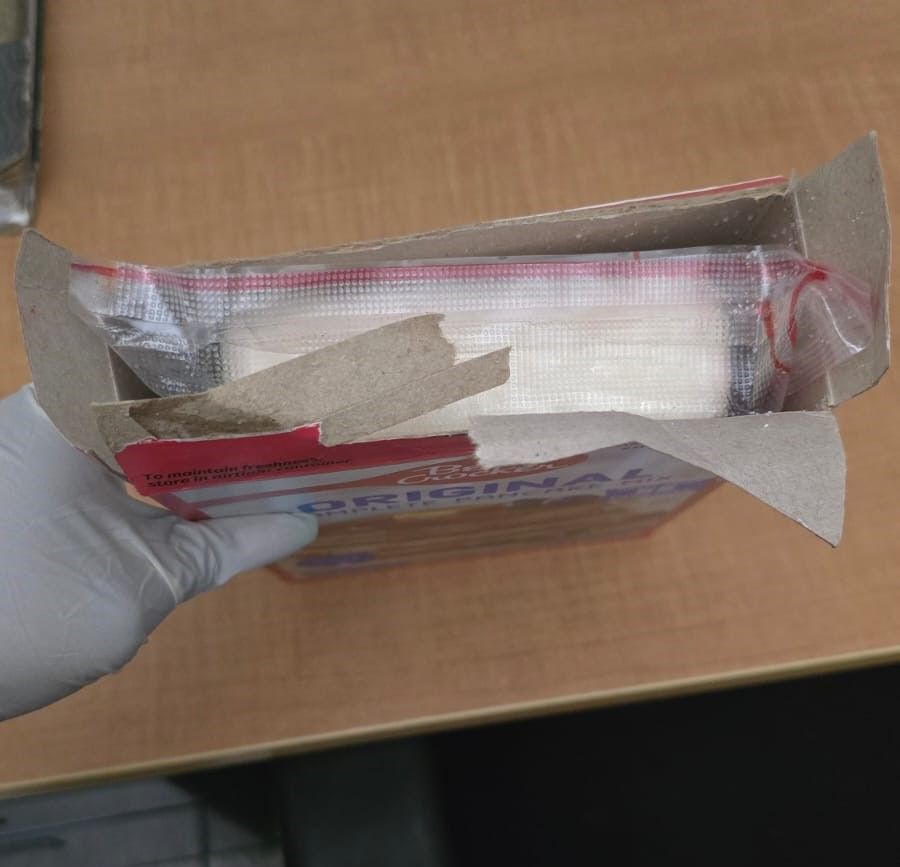
Cocaine seizure at ANR Robinson Airport