
Senior Multimedia Reporter
radhi[email protected]
May 1 is traditionally marked by the raised voices of the trade union movement—placards held high, grievances aired, and demands for better wages and working conditions echoing through the streets in the annual May Day march.
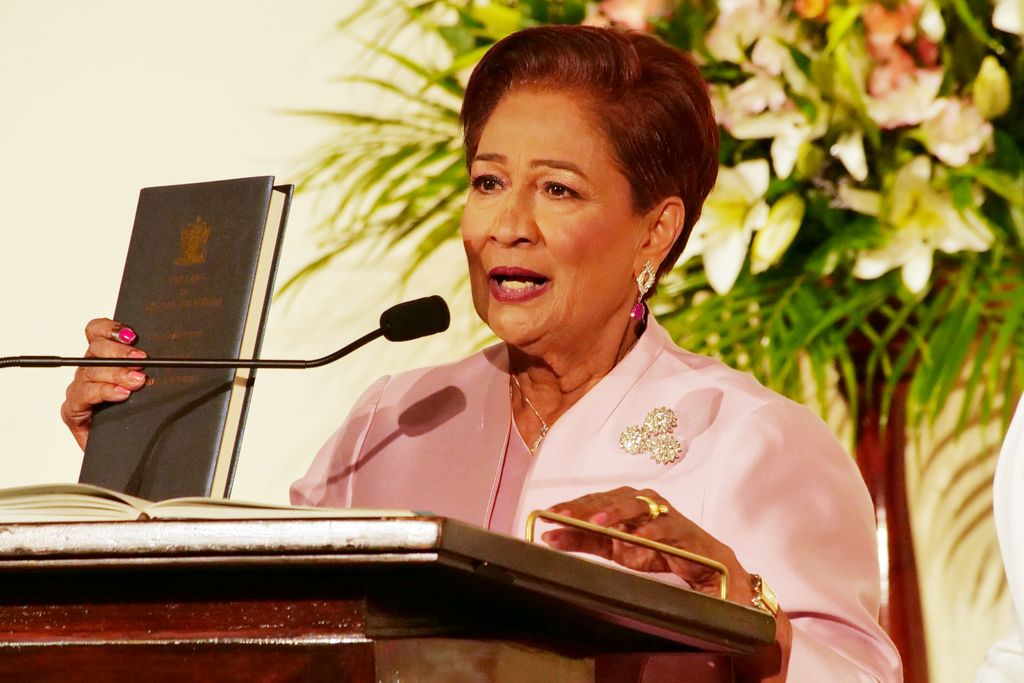
This year, however, the familiar bellow of discontent was replaced by applause, as Kamla Persad-Bissessar was sworn in for a second term as Prime Minister, once again buoyed by the support of organised labour.
For some citizens, the moment felt like a breath of fresh political air, after what they described as years of economic hardship, social strain and callous governance under the People’s National Movement (PNM) administration led by Dr Keith Rowley.
The ceremony carried with it the weight of expectation. Analysts said T&T was not merely witnessing a change in government; it was investing its hope in renewal. Yet, as the month unfolded, it became clear that May would begin with pageantry and end with consequences—some domestic, others regional—that would reverberate for months.
The first week of May was defined by the rituals of the State. Oaths were sworn, ministerial portfolios assigned, and Parliament convened. These formalities unfolded against a backdrop of anticipation that outweighed celebration. The country, still reeling from years of economic contraction and social unease, watched closely for signs of direction and resolve.
The Cabinet was sworn in within days, and the moment was historic in more ways than one. Dr Rowley resigned as political leader of the PNM, clearing the way for Pennelope Beckles to become Opposition Leader. The result was unprecedented. For the first time in Trinidad and Tobago’s history, three women from south Trinidad simultaneously occupied the country’s highest constitutional offices—President (Christine Kangaloo), Prime Minister, and Opposition Leader.
On May 3, moments after her Cabinet took the oath of office, Prime Minister Persad-Bissessar delivered her first address to the nation. It was not a victory speech, but a call for inclusion and urgency. She signalled that the task ahead was not about triumph but transformation.
“The first order of business is to get to work,” she declared. After years of economic strain and deepening social fractures, she said, the country demanded action. “What people want is delivery.”
Even as the new UNC administration settled into Whitehall, matters of regional security were already unfolding. T&T continued to receive assistance from the United States under a treaty signed by the previous administration. US Marines were on the ground during May as part of Exercise Tradewinds 2025, a multinational military exercise co-hosted by the Trinidad and Tobago Defence Force and US Southern Command.
The exercise, which ran from April 26 to May 8, involved more than 750 military and security personnel from 26 countries. While framed as a training and cooperation effort, its presence took on added significance with the emergence of rising regional tensions and instability that would characterise the rest of the year.
If the swearing-in ceremonies offered optimism, the financial disclosures that followed were sobering. By mid-May, the scale of the country’s fiscal challenges came into sharp focus. The Government faced a significant deficit, estimated at $4.42 billion for May alone, forcing the State to fully utilise its overdraft facility at the Central Bank.
By May 11, Attorney General John Jeremie revealed that his ministry was effectively without funds, burdened by tens of millions of dollars’ worth of unpaid legal fees inherited from the previous administration. Shortly after, Prime Minister Persad-Bissessar disclosed an even grimmer picture: a multi-billion-dollar fiscal shortfall and a pattern in which state enterprises had repeatedly failed to submit audited accounts.
Her response was firm and public. State enterprises were warned that the era of lax oversight had ended. Audits, she said, would no longer be optional, and accountability would be enforced. The message resonated with a population weary of hearing about waste, inefficiency and mismanagement without consequences.
Yet, even as government officials spoke openly of empty coffers, the administration moved swiftly on an issue that has long carried emotional weight. On May 10, Persad-Bissessar announced her first policy initiative: the expansion of the Children’s Life Fund, a programme that helps critically ill children access medical treatment abroad when such care is unavailable locally.
On May 18, Dr Radica Mahase, founder of Support Autism TT, welcomed the announcement, noting that too many parents had spent years fundraising in desperation, only to lose their children as time ran out. The decision struck a chord with the public, offering a reminder that governance was not only about balancing books but about preserving lives.
As the month progressed, the Government began making difficult decisions aimed at cutting costs and restructuring state institutions. In early May, several members of the Water and Sewerage Authority’s (WASA) board of commissioners resigned, and by mid-May the administration formally scrapped the previous government’s controversial transformation plan for WASA.
Public Utilities Minister Barry Padarath said the savings would run into the tens of millions of dollars. Reaction was mixed. Some welcomed the move as long overdue, while others—particularly workers—expressed anxiety about job security. Former public utilities minister Marvin Gonzales condemned the decision.
Beyond politics and policy, May also marked the end of the dry season. Heavy rains arrived earlier than expected, triggering fears of flooding in low-lying areas such as Woodland and reviving concerns about a potentially severe dengue season.
Local Government Minister Khadijah Ameen launched an aggressive river-clearing programme which spared several communities in the South Oropouche Drainage Basin from serious flooding. Still, the threat of dengue loomed. Health Minister Dr Lackram Bodoe urged citizens to clear private drains, remove standing water and seek medical attention at the first sign of symptoms. The warnings carried weight. The previous year’s dengue outbreak had claimed several lives and strained an already burdened health system.
As floodwaters rose in some districts, reports of fire emerged in others. In Hillside Gardens, Buen Intento, a firefighter’s home was destroyed in a blaze that exposed long-standing gaps in emergency response. The now-defunct Princes Town Fire Station was just minutes away, but it was unavailable when the blaze broke out.
The station had been closed in July 2024 after firefighters walked off the job over deteriorating conditions and rat infestations. Since then, Princes Town had relied on stations in Rio Claro and Penal. Residents spoke openly of loss that might have been prevented, and Princes Town MP Dr Aiyna Ali vowed to push for improvements.
Amid mounting pressures, the national mood darkened further as crime continued unabated. May ended with 23 reported murders, alongside reports of home invasions, armed robberies and shootings.
Among those who died were Dacian John, a member of the Trinidad and Tobago Defence Force who was shot and killed in his vehicle in Point Fortin on May 2; Emilio Diaz O’Connor Espinoza, a Laventille resident who died in a fiery single-vehicle accident in Point Fortin on May 12; and Zachariah Gil, a 25-year-old police officer attached to the Port-of-Spain Guard Unit who was killed in a road traffic accident on the Solomon Hochoy Highway on May 19. Also found dead was Krish Pillay, who was reportedly murdered on May 21.
The killings reignited national debate about crime policy. When talk emerged of possible “stand-your-ground” legislation—similar to laws in parts of the United States—some citizens expressed support. Legal experts, however, urged caution. Former attorney general Ramesh Lawrence Maharaj warned that in a country already tense and heavily armed, such measures could further inflame violence rather than deter it.
Amid political turbulence and social anxiety, T&T also mourned a cultural giant. Wendy Kalicharan, Carnival icon and co-founder of Kalicharan Mas, passed away peacefully at her San Fernando home on May 8 at the age of 76. Tributes poured in from bandleaders, designers and revellers who credited her with shaping generations of masquerade.
Her passing was a poignant reminder that while politics dominates headlines, culture remains the country’s emotional anchor—and its losses are deeply felt.
By the final days of May, it was clear that if the new Government had enjoyed any honeymoon period, it had been fleeting. The administration inherited depleted finances, institutional weaknesses and a public demanding transparency, safety and delivery.
As the month closed, citizens remained hopeful yet impatient; sceptical yet invested. The applause of May 1 had given way to scrutiny. And as regional and national tensions began to surface, T&T stood at a crossroads—aware that the months ahead would test not only its leaders but also its unity and resilience as a nation.
Related News

Alexander helps cops nab 4 bandits in Christmas Day operation

Customs duty removed on farm equipment imports
Over 120 families move into new homes ahead of Christmas